
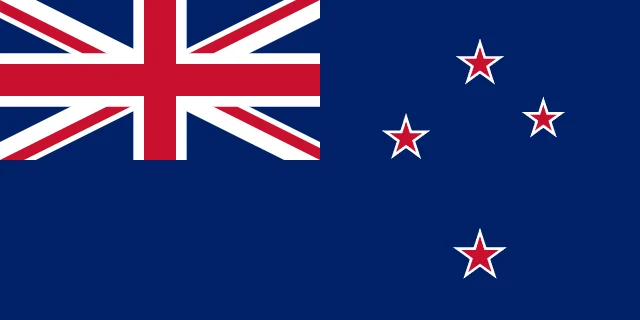
New Zealand National Anthem — God Defend New Zealand
"God Defend New Zealand" is one of New Zealand's two national anthems (the other being "God Save the King"), and by far the more commonly sung. The English words were written as a poem by Thomas Bracken in the 1870s, and the music was composed in 1876 by John Joseph Woods; a Māori version was later written by Thomas Henry Smith. It was made an official national anthem, with equal status, in 1977. Today it is usually sung with the first verse in Māori followed by the first verse in English. This page gathers the anthem's Māori and English lyrics, meaning and history.
God Defend New Zealand English Lyrics
Original (English) version
E Ihowā Atua,O ngā iwi mātou rā
Āta whakarangona;
Me aroha noa
Kia hua ko te pai;
Kia tau tō atawhai;
Manaakitia mai
Aotearoa
English Translation version
God of Nations at Thy feet,In the bonds of love we meet,
Hear our voices, we entreat,
God defend our free land.
Guard Pacific's triple star,
From the shafts of strife and war,
Make her praises heard afar,
God defend New Zealand.
Public domain — words by Thomas Bracken (1870s), music by John Joseph Woods (1876); Māori version by Thomas Henry Smith.
Lyrics licensed via Public Domain.
Song Details
- Singer
- New Zealand
- Lyricist
- Thomas Bracken; Māori version by Thomas Henry Smith
- Music
- John Joseph Woods
- Genre
- National Anthem
- Released
- Nov 21, 1977
- Language
- English
- Views
- 101
💭 Meaning of "God Defend New Zealand" Song Lyrics
"God Defend New Zealand" is a prayer for the nation. It asks the "God of Nations" to hear the voices of a people meeting "in the bonds of love", and to "defend our free land" from "the shafts of strife and war".
Its imagery is distinctly of the country and the Pacific — "Guard Pacific's triple star" is often read as a reference to New Zealand's islands. The Māori verse, "E Ihowā Atua", is not a literal translation but a parallel text carrying the same spirit of blessing and protection over Aotearoa.
🎬 Behind the song: how "God Defend New Zealand" was made
Thomas Bracken, an Irish-born poet, wrote the words in the early 1870s and ran a competition to set them to music; John Joseph Woods composed the winning melody in 1876. A Māori translation was made by Thomas Henry Smith around 1878. The song grew in popularity and was recognised as New Zealand's national song in 1940. In 1977, with the Queen's permission, "God Defend New Zealand" was given equal status with "God Save the Queen" as a national anthem.
🌍 "God Defend New Zealand" — Cultural impact & legacy
Today "God Defend New Zealand" is almost always the anthem used, and it is now standard to sing the first verse in Māori and then in English — a practice that has helped bring the Māori language to national occasions and sporting events. Its dual-language performance has become a celebrated symbol of modern New Zealand identity.
📖 What is "God Defend New Zealand Song Lyrics" about?
"God Defend New Zealand" is a national anthem of New Zealand — the one most often sung — and a distinctive bilingual entry among the world's national anthems. The English words are by Thomas Bracken, the music by John Joseph Woods (1876), and the Māori version by Thomas Henry Smith.
It gained equal status as a national anthem in 1977. The words and music are in the public domain.
⭐ Behind the song trivia
- New Zealand has two official national anthems: "God Defend New Zealand" and "God Save the King" — the former is the one usually sung.
- The English words were written by Irish-born poet Thomas Bracken; the music was composed by John Joseph Woods in 1876.
- It is customary to sing the first verse in Māori ("E Ihowā Atua") and then in English.
- The Māori version is a parallel text by Thomas Henry Smith, not a literal translation.
- "Pacific's triple star" in the lyrics is often read as a reference to New Zealand's islands.
- It was given equal status as a national anthem in 1977, after decades as a national song.
❓ God Defend New Zealand — Frequently asked questions
What is the national anthem of New Zealand?
What does "God Defend New Zealand" mean?
Why is the anthem sung in Māori and English?
Who wrote the New Zealand national anthem?
Is the Māori version a direct translation?
When did God Defend New Zealand become an anthem?
👥 Credits
| Vocals | New Zealand |
|---|---|
| Lyricist | Thomas Bracken; Māori version by Thomas Henry Smith |
| Music Director | John Joseph Woods |
📄 Copyright disclaimer
All lyrics, images, and audio/video featured on LyricsSol.com are the intellectual property of their respective copyright owners. We do not claim ownership of any lyrics, music, or related media.
Lyrics are provided solely for educational, reference, and personal use under the doctrine of fair use. No copyright infringement is intended.
If you are the rightful copyright holder and would like any content to be removed or credited differently, please contact us through our Contact Page for prompt action.
Comments 0
No comments yet. Be the first to share your thoughts!