
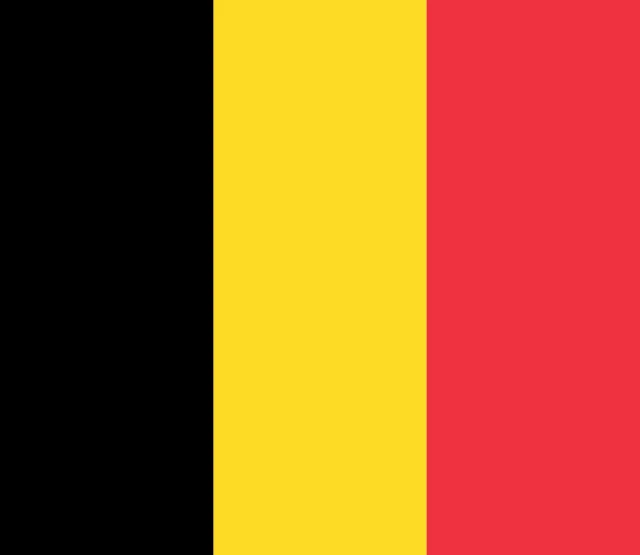
Belgium National Anthem — La Brabançonne
La Brabançonne is the national anthem of Belgium, sung in the country's three official languages — French, Dutch and German. It was written during the Belgian Revolution of 1830 — the original words by the French-born actor Jenneval (Alexandre Dechet) set to music by François van Campenhout — and its lyrics were rewritten over the following decades. Prime Minister Charles Rogier softened the text in 1860 to remove its anti-Dutch attacks, and a 1921 decree made the fourth verse of Rogier's version the sole official one. Its ringing motto — "The King, the Law, Liberty!" — captures Belgian unity. This page carries every version, from the fiery 1830 original to the modern trilingual anthem, with English translations.
La Brabançonne French (Official) Lyrics
French (Official) version
Noble Belgique, ô mère chérie,
À toi nos cœurs, à toi nos bras,
À toi notre sang, ô Patrie !
Nous le jurons tous, tu vivras !
Tu vivras toujours grande et belle
Et ton invincible unité
Aura pour devise immortelle :
Le Roi, la Loi, la Liberté !
Le Roi, la Loi, la Liberté !
Dutch (Official) version
O dierbaar België, O heilig land der Vaad'ren,
Onze ziel en ons hart zijn u gewijd.
Aanvaard ons kracht en het bloed van onze ad'ren,
Wees ons doel in arbeid en in strijd.
Bloei, o land, in eendracht niet te breken;
Wees immer uzelf en ongeknecht,
Het woord getrouw, dat g' onbevreesd moogt spreken,
Voor Vorst, voor Vrijheid en voor Recht!
Voor Vorst, voor Vrijheid en voor Recht!
German (Official) version
O liebes Land, o Belgiens Erde,
Dir unser Herz, Dir unsere Hand,
Dir unser Blut, o Heimaterde,
wir schwören's Dir, o Vaterland!
So blühe froh in voller Schöne,
zu der die Freiheit Dich erzog,
und fortan singen Deine Söhne:
Gesetz und König und die Freiheit hoch!
Gesetz und König und die Freiheit hoch!
English Translation version
Noble Belgium, O dear mother,
To you our hearts, to you our arms,
To you our blood, O Fatherland!
We all swear, you shall live!
You shall always live great and beautiful,
And your invincible unity
Shall have as an immortal motto:
The King, the Law, Liberty!
The King, the Law, Liberty!
1830 — Original (Jenneval) version
Dignes enfants de la Belgique
Qu'un beau délire a soulevés,
À votre élan patriotique
De grand succès sont réservés.
Restons armés que rien ne change !
Gardons la même volonté,
Et nous verrons refleurir l'Orange
Sur l'arbre de la Liberté.
Aux cris de meurtre et de pillage,
Des méchants s'étaient rassemblés,
Mais votre énergique courage
Loin de vous les a refoulés.
Maintenant, purs de cette fange
Qui flétrissait votre cité,
Amis, il faut greffer l'Orange
Sur l'arbre de la Liberté.
Et toi, dans qui ton peuple espère,
Nassau, consacre enfin nos droits;
Des Belges en restant le père
Tu seras l'exemple des rois.
Abjure un ministre étrange,
Rejette un nom trop détesté,
Sur l'arbre de la Liberté.
Mais malheur, si, de l'arbitraire
Protégeant les affreux projets,
Sur nous du canon sanguinaire,
Tu venais lancer les boulets !
Alors tout est fini, tout change,
Plus de pacte, plus de traité,
Et tu verras tomber l'Orange
De l'arbre de la Liberté.
English translation
Worthy children of the Low Countries,
Whom a fine passion has aroused,
To your patriotic fervour
Great successes lie in store.
Remain under arms, so that naught shall change!
Let us keep to the same will,
And we shall see Orange bloom anew
Upon the tree of Liberty.
To cries of murder and pillage,
The wicked had rallied around,
But your forceful courage
Has pushed them far away.
Now, pure of this filth
That was soiling your city,
Friends, we must graft Orange
Onto the tree of Liberty.
And you, in whom your people place their hopes,
Nassau, set firm our rights at last;
Remaining the father of the Belgians,
You'll be the example of kings.
Forswear a foreign minister,
Reject a too hated name,
And you will see Orange ripen
Upon the tree of Liberty.
But woe to you if, wilfully,
You turn on us
The bloody cannon's fire!
Then all is over, all is changing;
No more pact, no more treaty,
And you shall see Orange fall
From the tree of Liberty.
1830 — Second version version
Qui l'aurait cru ? ...de l'arbitraire
Consacrant les affreux projets,
Sur nous de l'airain militaire
Un prince a lancé les boulets.
C'en est fait ! Oui, Belges, tout change,
Avec Nassau plus d'indigne traité !
La mitraille a brisé l'Orange
Sur l'arbre de la Liberté.
Trop généreuse en sa colère,
La Belgique, vengeant ses droits,
D'un roi, qu'elle appelait son père,
N'implorait que de justes lois.
Mais lui dans sa fureur étrange,
Par le canon que son fils a pointé,
Au sang belge a noyé l'Orange
Sous l'arbre de la Liberté.
Fiers brabançons, peuples de braves,
Qu'on voit combattre sans fléchir,
Du sceptre honteux des Bataves,
Tes balles sauront t'affranchir.
Sur Bruxelles, au pied de l'archange,
Ton saint drapeau pour jamais est planté,
Croît l'arbre de la Liberté.
Et vous, objets de nobles larmes,
Braves, morts au feu des cannons,
Avant que la patrie en armes
Ait pu connaître au moins vos noms,
Sous l'humble terre où l'on vous range,
Dormez, martyrs, bataillon indompté !
Dormez en paix, loin de l'Orange,
Sous l'arbre de la Liberté.
English translation
Who could have believed it? ...wilfully
Pursuing dreadful plans,
On us, with cannon's brass,
A prince has opened fire.
It has been done! Yes, Belgians, all is changing;
No more unworthy treaty with Nassau!
Grapeshot has shattered Orange
Upon the tree of Liberty.
Too generous in her anger,
Belgium, avenging her rights,
From a king, whom she called her father,
Sought no more than just laws.
But he, in his unexpected fury,
By the cannon aimed by his son
Has drowned Orange in Belgian blood
Beneath the tree of Liberty.
O proud, brave people of Brabant,
Seen not to flinch amid the fight,
From the Batavians' shameful sceptre
Your bullets will set you free.
On Brussels, together with the archangel
Your holy flag is planted for ever;
And, proud to grow green without Orange,
Grows higher the tree of Liberty.
And you, objects of noble tears,
Before the Fatherland, under arms,
Could know at least your names,
Beneath the humble earth where you are laid,
Sleep, martyrs, unbroken battalion!
Sleep in peace, far from Orange,
Beneath the tree of Liberty.
1860 — Full version (Rogier) version
Après des siècles et des siècles d'esclavage,
Le Belge sortant du tombeau
A reconquis par sa force et son courage
Son nom, ses droits et son drapeau.
Et ta main souveraine et fière,
Désormais, peuple indompté,
Grava sur ta vieille bannière :
Le Roi, la Loi, la Liberté !
Marche de ton pas énergique,
Marche de progrès en progrès;
Dieu qui protège la Belgique,
Sourit à tes mâles succès.
Travaillons, notre labeur donne
À nos champs la fécondité !
Et la splendeur des arts couronne
Le Roi, la Loi, la Liberté !
Ouvrons nos rangs à d'anciens frères,
De nous trop longtemps désunis;
Belges, Bataves, plus de guerres.
Les peuples libres sont amis.
À jamais resserrons ensemble
Les liens de fraternité
Le Roi, la Loi, la Liberté !
Ô Belgique, ô mère chérie,
À toi nos cœurs, à toi nos bras !
À toi notre sang, ô Patrie !
Nous le jurons tous tu vivras !
Tu vivras toujours grande et belle
Et ton invincible unité
Aura pour devise immortelle :
Le Roi, la Loi, la Liberté !
English translation
After century on century in slavery,
The Belgian, arising from the tomb,
Has reconquered through his strength and courage
His name, his rights and his flag.
And now, undaunted people,
Your hand, sovereign and proud,
Has inscribed on your ancient banner:
The King, and Law, and Liberty!
March with your energetic step,
March with progress and progress;
God who protects Belgium,
Smiles on your manly successes.
Let us work, our labour gives
To our fields fertility!
And the splendour of the arts crowns
The King, and Law, and Liberty!
Let us open our ranks to old brothers,
From us disunited for too long;
Belgians, Batavians, no more wars.
Free peoples are friends.
Forever let us tighten together
The links of fraternity,
And let a single cry rally us:
The King, and Law, and Liberty!
O Belgium, O dear mother,
To you our blood, O Fatherland!
We all swear, you shall live!
You shall always live great and beautiful,
And your invincible unity
Shall have as an immortal motto:
The King, the Law, Liberty!
Public domain — original lyrics by "Jenneval" (Louis-Alexandre Dechet, 1830), music by François van Campenhout (1830); text revised in 1860.
Lyrics licensed via Public Domain.
Song Details
- Singer
- Belgium
- Composer
- François van Campenhout
- Lyricist
- Jenneval (Louis-Alexandre Dechet); revised by Charles Rogier
- Music
- François van Campenhout
- Genre
- National Anthem
- Released
- Jan 01, 1830
- Language
- French
- Views
- 213
💭 Meaning of "La Brabançonne" Song Lyrics
The modern "La Brabançonne" is a compact oath of loyalty to Belgium. In its official verse the singer pledges heart, arms and blood to the fatherland, swears that the nation "shall live", and crowns its "invincible unity" with a three-word motto that doubles as Belgium's national ideal: Le Roi, la Loi, la Liberté — "The King, the Law, Liberty". It is a hymn to national unity rather than conquest.
The earlier versions are far more warlike, and reading them explains the anthem's whole history. The 1830 originals were written in the heat of revolution against Dutch rule, and they are openly anti-Orange — "Orange" meaning the House of Orange-Nassau, the Dutch royal family. The famous refrain image is a growing "tree of Liberty" on which Orange first blooms, is grafted, and finally — as the revolt hardens — is shattered and falls. The blunt second version of September 1830 curses the Dutch king's cannon and vows the Belgians will grow "green without Orange". By 1860 the young kingdom wanted peace with its neighbour, so Charles Rogier rewrote the words, stripped out the attacks on Orange and Nassau, and replaced them with the calmer patriotism sung today.
🎬 Behind the song: how "La Brabançonne" was made
"La Brabançonne" — its name refers to Brabant — was written during the Belgian Revolution of 1830. The original French lyrics were by a young French actor known as "Jenneval" (Louis-Alexandre Dechet), who was killed in the fighting; the music was by François van Campenhout. In 1860 the text was revised, notably by Prime Minister Charles Rogier, to soften passages hostile to the Dutch. Official Dutch and German versions were later established.
🌍 "La Brabançonne" — Cultural impact & legacy
Few anthems wear their history as openly as "La Brabançonne". Belgium has three official languages, and the anthem exists officially in all three — French, Dutch and German — a reflection of the country's federal, multilingual identity. The recurring "tree of Liberty" and "Orange" imagery of the 1830 verses is a direct record of the revolution against Dutch rule, while Rogier's 1860 rewrite shows a new nation choosing reconciliation over grievance. Belgians most often sing only the official fourth verse, and its motto "Le Roi, la Loi, la Liberté" appears throughout Belgian civic life — a rare case of a national song whose evolving lyrics track the country's journey from revolt to settled statehood.
📖 What is "La Brabançonne Song Lyrics" about?
"La Brabançonne" is the national anthem of Belgium. Its original French lyrics were written in September 1830, during the Belgian Revolution, by the actor Jenneval (Louis-Alexandre Dechet), and set to music by François van Campenhout. The title refers to Brabant, a historic heartland of the revolt.
The text changed with the times. The first 1830 lyrics still hoped to reconcile with the House of Orange-Nassau; a second, angrier 1830 version turned firmly against it after fighting broke out. In 1860 Prime Minister Charles Rogier revised the anthem to remove the anti-Dutch passages. A ministerial decree of 8 August 1921 finally settled matters, declaring that only the fourth verse of Rogier's text — in French, Dutch and German — is the official anthem. All versions are gathered on this page.
⭐ Behind the song trivia
- "La Brabançonne" is named after Brabant and was born in the Belgian Revolution of 1830.
- Its original lyricist, the actor "Jenneval" (Louis-Alexandre Dechet), was killed during the revolution.
- The lyrics were revised in 1860 to remove passages hostile to the Dutch.
- It has official lyrics in all three of Belgium's languages: French, Dutch and German.
- Its refrain is the national motto: "The King, the Law, Liberty".
- A Belgian politician once mistakenly began singing "La Marseillaise" when asked for the anthem.
❓ La Brabançonne — Frequently asked questions
What is the national anthem of Belgium?
What are the La Brabançonne lyrics in English?
Why does Belgium's anthem have French, Dutch and German versions?
What does "La Brabançonne" mean?
How many versions of La Brabançonne are there?
Who wrote La Brabançonne?
👥 Credits
| Vocals | Belgium |
|---|---|
| Composer | François van Campenhout |
| Lyricist | Jenneval (Louis-Alexandre Dechet); revised by Charles Rogier |
| Music Director | François van Campenhout |
📄 Copyright disclaimer
All lyrics, images, and audio/video featured on LyricsSol.com are the intellectual property of their respective copyright owners. We do not claim ownership of any lyrics, music, or related media.
Lyrics are provided solely for educational, reference, and personal use under the doctrine of fair use. No copyright infringement is intended.
If you are the rightful copyright holder and would like any content to be removed or credited differently, please contact us through our Contact Page for prompt action.
Comments 0
No comments yet. Be the first to share your thoughts!