Turkey National Anthem — İstiklâl Marşı
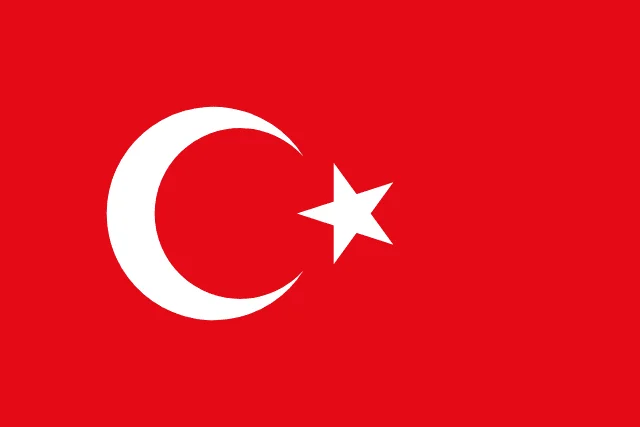
The "İstiklâl Marşı" ("The Independence March") is the national anthem of Turkey (and of Northern Cyprus). Its words were written by the poet Mehmet Akif Ersoy and adopted by the Grand National Assembly on 12 March 1921, in the midst of the Turkish War of Independence and two years before the Republic itself was founded. The melody was later composed by Osman Zeki Üngör. Passionate and defiant, it addresses the nation's crimson flag and vows that Turkey will remain free. This page gathers the anthem's Turkish lyrics, English translation, meaning and history.
İstiklâl Marşı Turkish Lyrics
Original (Turkish) version
Korkma! Sönmez bu şafaklarda yüzen al sancak,Sönmeden yurdumun üstünde tüten en son ocak.
O benim milletimin yıldızıdır, parlayacak;
O benimdir, o benim milletimindir ancak.
Çatma, kurban olayım, çehreni ey nazlı hilal!
Kahraman ırkıma bir gül; ne bu şiddet, bu celal?
Sana olmaz dökülen kanlarımız sonra helal...
Hakkıdır, Hakk'a tapan milletimin istiklal!
English Translation version
Fear not! The crimson banner rippling in this glorious dawn shall never fade,while the last fiery hearth aglow in my homeland still burns.
That is the star of my nation, and it shall forever shine;
it is mine, and belongs to my valiant nation alone.
Frown not, I beseech you, O bashful crescent!
Smile upon my heroic people — why this anger, why this rage?
The blood we shed for you would not be blessed otherwise;
for freedom is the right of my God-worshipping nation!
Public domain — lyrics by Mehmet Akif Ersoy (1921); music by Osman Zeki Üngör.
Lyrics licensed via Public Domain.
Song Details
- Singer
- Turkey
- Lyricist
- Mehmet Akif Ersoy
- Music
- Osman Zeki Üngör
- Genre
- National Anthem
- Released
- Mar 12, 1921
- Language
- Turkish
- Views
- 238
💭 Meaning of "İstiklâl Marşı" Song Lyrics
The "İstiklâl Marşı" is a fervent hymn to freedom written at a moment of national peril. Its opening — "Korkma!" ("Fear not!") — reassures the people that the "crimson banner" of Turkey will never fade so long as a single hearth still burns in the homeland; the flag is called "the star of my nation".
The second stanza speaks tenderly to the crescent on the flag as if to a beloved, asking it not to frown but to smile on a "heroic" people, and declares that "freedom is the right of my God-worshipping nation". It fuses faith, sacrifice and fierce love of independence.
🎬 Behind the song: how "İstiklâl Marşı" was made
In 1921, during the War of Independence, the Grand National Assembly held a competition for a national anthem; the poet Mehmet Akif Ersoy's entry was chosen from 724 submissions, and he famously refused the prize money. The Assembly adopted the poem on 12 March 1921. A melody by Osman Zeki Üngör was selected later and subsequently arranged by Edgar Manas. Only the first two of the poem's ten stanzas are performed as the anthem.
🌍 "İstiklâl Marşı" — Cultural impact & legacy
The "İstiklâl Marşı" is inseparable from the founding of modern Turkey and from its author, Mehmet Akif Ersoy, who out of modesty did not include it in his own poetry collections. Recited by schoolchildren and sung at national ceremonies, it is also the national anthem of the Turkish Republic of Northern Cyprus.
📖 What is "İstiklâl Marşı Song Lyrics" about?
The "İstiklâl Marşı" ("The Independence March") is the national anthem of Turkey, one of the most stirring of the world's national anthems. The lyrics are by the poet Mehmet Akif Ersoy; the music is by Osman Zeki Üngör.
It was adopted on 12 March 1921. The full poem has ten stanzas, of which the first two are sung. The text is in the public domain.
⭐ Behind the song trivia
- "İstiklâl Marşı" means "The Independence March".
- It was adopted on 12 March 1921, two years before the Republic of Turkey was founded.
- Poet Mehmet Akif Ersoy's words were chosen from 724 competition entries, and he refused the prize money.
- The poem has ten stanzas, but only the first two are sung as the anthem.
- It is also the national anthem of the Turkish Republic of Northern Cyprus.
- Out of modesty, Ersoy never included the poem in his own published collections.
❓ İstiklâl Marşı — Frequently asked questions
What is the national anthem of Turkey?
What does the İstiklâl Marşı mean?
When was the Turkish anthem adopted?
Who wrote the Turkish national anthem?
Why is only part of the poem sung?
Do Turkey and Northern Cyprus share the same anthem?
👥 Credits
| Vocals | Turkey |
|---|---|
| Lyricist | Mehmet Akif Ersoy |
| Music Director | Osman Zeki Üngör |
📄 Copyright disclaimer
All lyrics, images, and audio/video featured on LyricsSol.com are the intellectual property of their respective copyright owners. We do not claim ownership of any lyrics, music, or related media.
Lyrics are provided solely for educational, reference, and personal use under the doctrine of fair use. No copyright infringement is intended.
If you are the rightful copyright holder and would like any content to be removed or credited differently, please contact us through our Contact Page for prompt action.
Comments 0
No comments yet. Be the first to share your thoughts!