
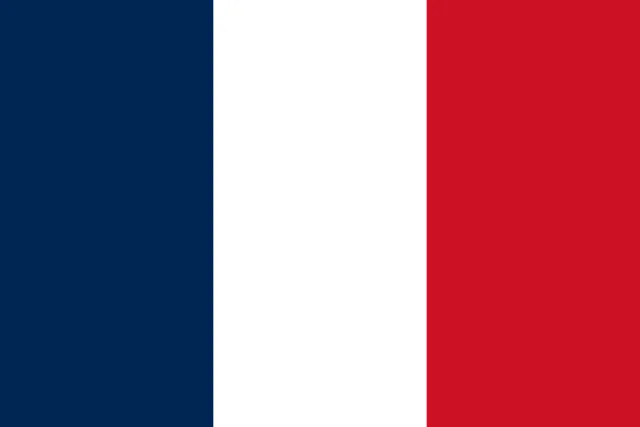
France National Anthem — La Marseillaise
"La Marseillaise" is the national anthem of France, written by Claude Joseph Rouget de Lisle in 1792 during the French Revolution and first adopted as the national anthem in 1795. Originally a war song for the Army of the Rhine, its stirring call to arms — "Aux armes, citoyens" — became the sound of the Revolution and, later, of the French Republic itself. This page gathers the anthem's French lyrics, an English translation, its meaning and history.
La Marseillaise French Lyrics
Original (French) version
Allons enfants de la Patrie,Le jour de gloire est arrivé !
Contre nous de la tyrannie
L'étendard sanglant est levé,
Entendez-vous dans les campagnes
Mugir ces féroces soldats ?
Ils viennent jusque dans vos bras
Égorger vos fils, vos compagnes !
Aux armes, citoyens,
Formez vos bataillons,
Marchons, marchons !
Qu'un sang impur
Abreuve nos sillons !
English Translation version
Arise, children of the Fatherland,The day of glory has arrived!
Against us tyranny's
Bloody banner is raised,
Do you hear, in the countryside,
The roar of those ferocious soldiers?
They're coming right into your arms
To cut the throats of your sons, your women!
To arms, citizens,
Form your battalions,
Let's march, let's march!
Let an impure blood
Water our furrows!
Public domain — words and music by Rouget de Lisle (1792).
Lyrics licensed via Public Domain.
Song Details
- Singer
- France
- Lyricist
- Claude Joseph Rouget de Lisle
- Music
- Claude Joseph Rouget de Lisle
- Genre
- National Anthem
- Released
- Jul 14, 1795
- Language
- French
- Views
- 203
💭 Meaning of "La Marseillaise" Song Lyrics
"La Marseillaise" is a revolutionary war song, and its meaning is unmistakably martial. The first verse warns that tyranny's "bloody banner" has been raised and that ferocious soldiers are coming to harm citizens' families — a rallying cry to defend the young Republic.
The famous refrain, "Aux armes, citoyens" ("To arms, citizens"), turns fear into collective action: form your battalions and march. Its vivid, violent imagery has made it both a stirring symbol of liberty and, at times, a subject of debate — but its power as a call to unity and resistance is undisputed.
🎬 Behind the song: how "La Marseillaise" was made
Rouget de Lisle wrote the song in a single night in April 1792 as a marching song for the Army of the Rhine. It earned its name after being sung by volunteers from Marseille as they entered Paris. The full song has seven verses, but the first verse and refrain are what is sung today.
🌍 "La Marseillaise" — Cultural impact & legacy
"La Marseillaise" has echoed through French history and beyond — from the Revolution to the Liberation of Paris, and famously in the film Casablanca. It remains a global shorthand for liberty and resistance, sung at moments of national mourning and celebration alike.
📖 What is "La Marseillaise Song Lyrics" about?
"La Marseillaise" is the national anthem of France, among the most famous of all national anthems. Both the words and the music were written by army officer Claude Joseph Rouget de Lisle in Strasbourg in 1792.
It was first adopted as the national anthem by the Convention in 1795, and — after periods out of favour — permanently reinstated in 1879. As an 18th-century work, it is in the public domain.
⭐ Behind the song trivia
- Rouget de Lisle wrote both the words and music in a single night in April 1792, in Strasbourg.
- It was originally titled "War Song for the Army of the Rhine".
- It got its lasting name from volunteers of Marseille who sang it as they marched into Paris.
- The full song has seven verses, but only the first verse and refrain are usually sung.
- It was banned during parts of the 19th century and only permanently reinstated as the anthem in 1879.
- Its most famous cinematic moment is the defiant sing-along scene in the 1942 film "Casablanca".
❓ La Marseillaise — Frequently asked questions
What is the national anthem of France?
Who wrote "La Marseillaise"?
What does "La Marseillaise" mean?
Why is it called "La Marseillaise"?
How many verses does "La Marseillaise" have?
Why is "La Marseillaise" sometimes controversial?
👥 Credits
| Vocals | France |
|---|---|
| Lyricist | Claude Joseph Rouget de Lisle |
| Music Director | Claude Joseph Rouget de Lisle |
📄 Copyright disclaimer
All lyrics, images, and audio/video featured on LyricsSol.com are the intellectual property of their respective copyright owners. We do not claim ownership of any lyrics, music, or related media.
Lyrics are provided solely for educational, reference, and personal use under the doctrine of fair use. No copyright infringement is intended.
If you are the rightful copyright holder and would like any content to be removed or credited differently, please contact us through our Contact Page for prompt action.
Comments 0
No comments yet. Be the first to share your thoughts!