
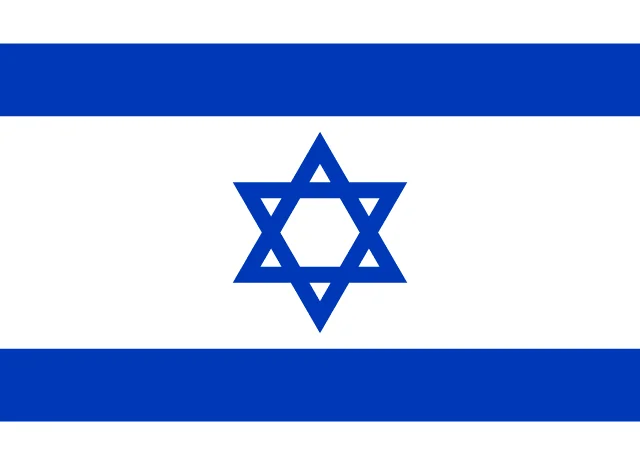
Israel National Anthem — Hatikvah
"Hatikvah" ("The Hope") is the national anthem of Israel. Its words are drawn from an 1878 poem, "Tikvatenu" ("Our Hope"), by the poet Naftali Herz Imber, and its melody was adapted by Samuel Cohen from a traditional European folk tune. Sung at the First Zionist Congress in 1897, it became the anthem of the Zionist movement and, from Israel's founding in 1948, the de facto national anthem — formally enshrined in law in 2004. Its theme is the two-thousand-year-old hope of the Jewish people to be free in the land of Zion. This page gathers the anthem's Hebrew lyrics, transliteration, English translation and history.
Hatikvah Hebrew Lyrics
Original (Hebrew) version
כֹּל עוֹד בַּלֵּבָב פְּנִימָהנֶפֶשׁ יְהוּדִי הוֹמִיָּה,
וּלְפַאֲתֵי מִזְרָח קָדִימָה,
עַיִן לְצִיּוֹן צוֹפִיָּה;
עוֹד לֹא אָבְדָה תִּקְוָתֵנוּ,
הַתִּקְוָה בַּת שְׁנוֹת אַלְפַּיִם,
לִהְיוֹת עַם חָפְשִׁי בְּאַרְצֵנוּ,
אֶרֶץ צִיּוֹן וִירוּשָׁלַיִם.
Romanized version
Kol od balevav penimahNefesh Yehudi homiyah,
Ulfa'atey mizrach kadimah,
Ayin leTziyon tzofiyah;
Od lo avdah tikvatenu,
Hatikvah bat shnot alpayim,
Lihyot am chofshi be'artzenu,
Eretz Tziyon viYerushalayim.
English Translation version
As long as in the heart, within,the Jewish soul still yearns,
and onward, towards the ends of the east,
an eye still gazes toward Zion;
Our hope is not yet lost,
the hope of two thousand years,
to be a free nation in our own land,
the land of Zion and Jerusalem.
Public domain — poem by Naftali Herz Imber (1878); melody adapted by Samuel Cohen from a traditional European tune.
Lyrics licensed via Public Domain.
Song Details
- Singer
- Israel
- Lyricist
- Naftali Herz Imber
- Music
- Samuel Cohen (adapted)
- Genre
- National Anthem
- Released
- Nov 10, 2004
- Language
- Hebrew
- Views
- 139
💭 Meaning of "Hatikvah" Song Lyrics
"Hatikvah" is, as its name says, a song of hope. It speaks of the "Jewish soul" that still yearns "within the heart", and of an eye that "gazes toward Zion" from the ends of the earth — the enduring longing of the Jewish people for their historic homeland.
Its most famous lines — "our hope is not yet lost, the hope of two thousand years, to be a free nation in our own land, the land of Zion and Jerusalem" — frame the entire anthem as the fulfilment of a two-millennia-old dream of return and self-determination.
🎬 Behind the song: how "Hatikvah" was made
Naftali Herz Imber wrote the nine-stanza poem "Tikvatenu" in 1878; the anthem uses a refined version of its first stanza and refrain. Around 1888 Samuel Cohen set the words to a melody based on a widely travelled European folk tune (also related to the theme of Smetana's "Vltava"). Adopted by the Zionist movement after the First Zionist Congress of 1897, "Hatikvah" was sung at the founding of Israel in 1948 and given official legal status in November 2004.
🌍 "Hatikvah" — Cultural impact & legacy
"Hatikvah" is deeply woven into Jewish and Israeli identity, sung at state ceremonies, Holocaust remembrance events and sporting victories. Its migratory folk melody, echoed in music across Europe, gives it a haunting, familiar quality, while its words carry the weight of centuries of longing.
📖 What is "Hatikvah Song Lyrics" about?
"Hatikvah" ("The Hope") is the national anthem of Israel, one of the most emotionally resonant of the world's national anthems. The lyrics come from an 1878 poem by Naftali Herz Imber; the melody was adapted by Samuel Cohen.
It served as the anthem of the Zionist movement from 1897 and as Israel's de facto anthem from 1948, and it was formally enshrined in law in 2004. Both text and melody are in the public domain.
⭐ Behind the song trivia
- "Hatikvah" means "The Hope".
- The lyrics come from an 1878 poem, "Tikvatenu" ("Our Hope"), by Naftali Herz Imber.
- The melody, adapted by Samuel Cohen, is related to a widely travelled European folk tune also echoed in Smetana's "Vltava" (The Moldau).
- It was sung at the First Zionist Congress in 1897 and became the movement's anthem.
- It was Israel's de facto anthem from 1948 but only enshrined in law in 2004.
- Its central line speaks of "the hope of two thousand years, to be a free nation in our own land".
❓ Hatikvah — Frequently asked questions
What is the national anthem of Israel?
What does "Hatikvah" mean?
Who wrote Hatikvah?
When did Hatikvah become Israel's anthem?
Where does the Hatikvah melody come from?
Is the whole poem the anthem?
👥 Credits
| Vocals | Israel |
|---|---|
| Lyricist | Naftali Herz Imber |
| Music Director | Samuel Cohen (adapted) |
📄 Copyright disclaimer
All lyrics, images, and audio/video featured on LyricsSol.com are the intellectual property of their respective copyright owners. We do not claim ownership of any lyrics, music, or related media.
Lyrics are provided solely for educational, reference, and personal use under the doctrine of fair use. No copyright infringement is intended.
If you are the rightful copyright holder and would like any content to be removed or credited differently, please contact us through our Contact Page for prompt action.
Comments 0
No comments yet. Be the first to share your thoughts!