
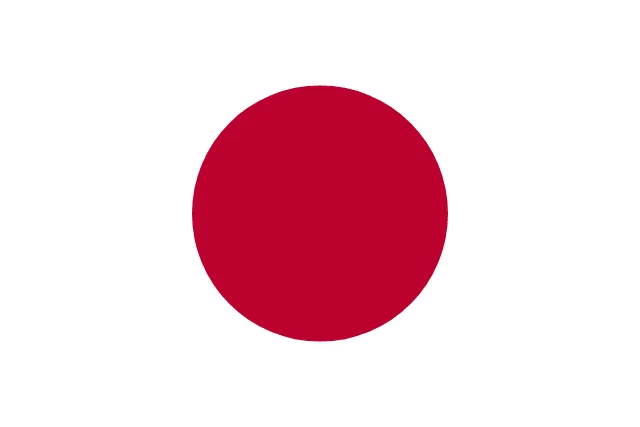
Japan National Anthem — Kimigayo
"Kimigayo" is the national anthem of Japan and one of the shortest in the world, at just five lines. Its words come from a waka poem written by an anonymous author in the Heian period (794–1185), set to a melody composed in 1880 by Yoshiisa Oku and Akimori Hayashi. In use since 1888, it was formally adopted by law in 1999. The lyrics wish for a reign to endure across the ages — until pebbles grow into moss-covered boulders. This page gathers the anthem's Japanese lyrics, romanised version, English translation, meaning and history.
Kimigayo Japanese Lyrics
Original (Japanese) version
君が代は千代に八千代に
さざれ石の
巌となりて
苔の生すまで
Romanized version
Kimigayo waChiyo ni yachiyo ni
Sazare-ishi no
Iwao to narite
Koke no musu made
English Translation version
May your reignContinue for a thousand, eight thousand generations,
Until the tiny pebbles
Grow into massive boulders
Lush with moss.
Public domain — ancient waka poem; melody 1880 (Oku and Hayashi).
Lyrics licensed via Public Domain.
Song Details
- Singer
- Japan
- Lyricist
- Traditional (Heian-era waka)
- Music
- Yoshiisa Oku and Akimori Hayashi
- Genre
- National Anthem
- Released
- Aug 13, 1999
- Language
- Japanese
- Views
- 1,231
💭 Meaning of "Kimigayo" Song Lyrics
"Kimigayo" is a poem of endurance. Its five lines wish that a reign — "kimi ga yo" — may continue for a thousand, then eight thousand generations, until tiny pebbles ("sazare-ishi") grow together into a great boulder covered in moss.
That image of pebbles slowly becoming a mossy rock is a metaphor for immense, almost geological spans of time and for lasting stability. Because the poem predates the modern nation, "kimi" has been read variously as "you", a beloved, or — in its role as anthem — the Emperor and the nation's continuity.
🎬 Behind the song: how "Kimigayo" was made
The words are an anonymous waka first collected in the Kokin Wakashū (c. 920). An initial 1869 melody by John William Fenton was discarded; the present melody was written in 1880 by court musicians Yoshiisa Oku and Akimori Hayashi, with Western harmonisation by Franz Eckert. It was made the legally official anthem by the 1999 Act on National Flag and Anthem.
🌍 "Kimigayo" — Cultural impact & legacy
At five lines and about a minute long, "Kimigayo" is famously spare and solemn. Its long history and imperial associations have made it, at times, a subject of debate in Japan, but its ancient poem and haunting melody remain unmistakably its own.
📖 What is "Kimigayo Song Lyrics" about?
"Kimigayo" is the national anthem of Japan — among the oldest lyrics and the shortest of all national anthems. Its text is a classical waka poem from the Heian period, first recorded around 920.
The current melody was composed in 1880. Long in use, it became the legally official anthem only in 1999. Both text and melody are in the public domain.
⭐ Behind the song trivia
- Its lyrics are an anonymous waka poem from the Heian period, first recorded around the year 920 — among the oldest texts of any national anthem.
- At just five lines, it is one of the shortest national anthems in the world.
- The current melody was composed in 1880 by court musicians Yoshiisa Oku and Akimori Hayashi, harmonised by the German Franz Eckert.
- An earlier 1869 melody by the Englishman John William Fenton was discarded for being unsuitable.
- Though used since 1888, it became the legally official anthem only in 1999.
- Its "sazare-ishi" (small pebbles fusing into a boulder) is a real geological phenomenon, and a shrine in Gifu is associated with the image.
❓ Kimigayo — Frequently asked questions
What is the national anthem of Japan?
What do the "Kimigayo" lyrics mean?
Who wrote "Kimigayo"?
Is "Kimigayo" the shortest national anthem?
When was "Kimigayo" adopted?
What is a "sazare-ishi"?
👥 Credits
| Vocals | Japan |
|---|---|
| Lyricist | Traditional (Heian-era waka) |
| Music Director | Yoshiisa Oku and Akimori Hayashi |
📄 Copyright disclaimer
All lyrics, images, and audio/video featured on LyricsSol.com are the intellectual property of their respective copyright owners. We do not claim ownership of any lyrics, music, or related media.
Lyrics are provided solely for educational, reference, and personal use under the doctrine of fair use. No copyright infringement is intended.
If you are the rightful copyright holder and would like any content to be removed or credited differently, please contact us through our Contact Page for prompt action.
Comments 0
No comments yet. Be the first to share your thoughts!